
Pork Adobo Low Carb (Easy Keto Filipino Recipe)
This post may contain affiliate links. As an Amazon Associate I earn from qualifying purchases, at no extra cost to you.
A Filipino Classic That Never Gets Old
Pork adobo has always been one of my favorite Filipino comfort foods. Growing up, it was one of those meals that tasted even better the next day. I still remember the wonderful aroma of garlic, vinegar, and soy sauce filling the kitchen as it slowly simmered on the stove. Like many Filipino families, we often made a large batch because everyone looked forward to the leftovers.
When I started eating low carb, I didn’t want to give up the dishes I loved. Instead, I looked for simple ways to make them fit my lifestyle. Thankfully, pork adobo is already naturally low in carbohydrates because it doesn’t rely on breading or starchy ingredients. The biggest adjustment was simply replacing the rice with lower-carb sides.
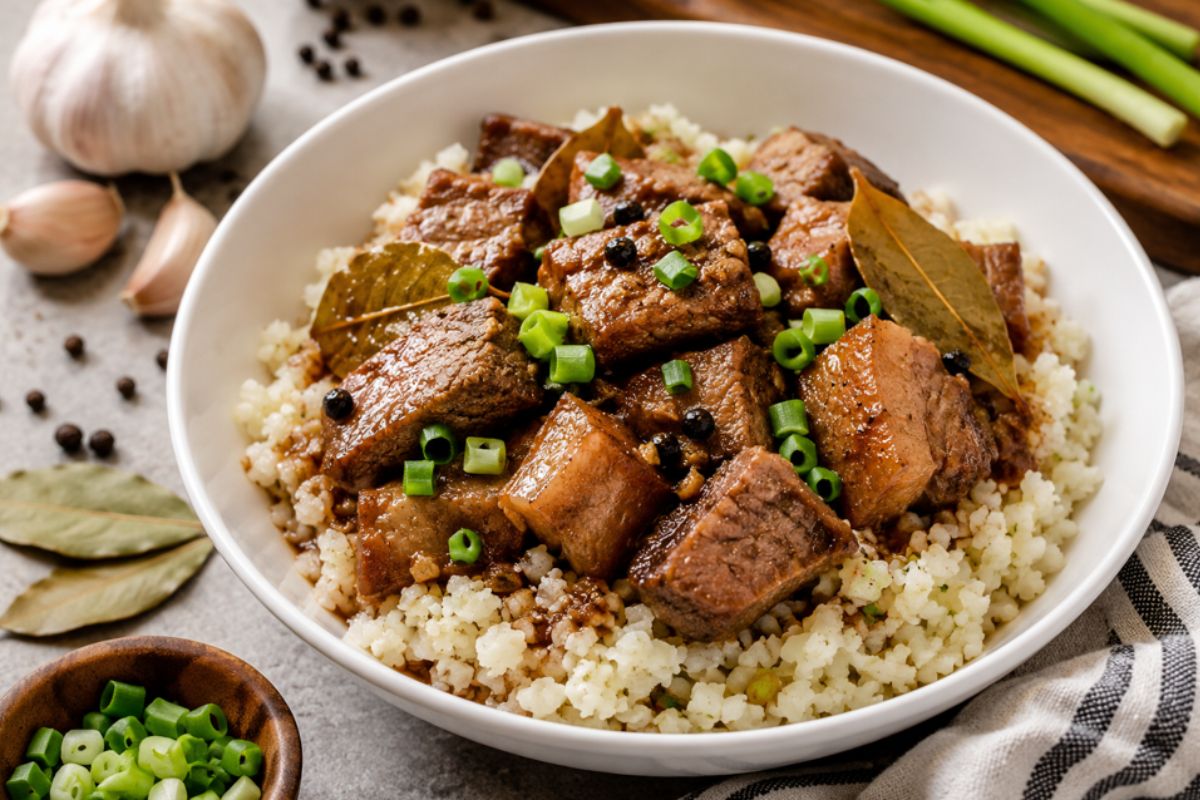
This Low Carb Pork Adobo keeps everything I love about the traditional recipe. It has tender pork, plenty of garlic, soy sauce, vinegar, black pepper, and fragrant oregano. Instead of serving it over white rice, I enjoy it with cauliflower rice or a fresh green salad. Both options let me enjoy the bold, savory flavors of adobo while keeping the meal keto friendly.
What Is Filipino Pork Adobo?
If you’ve never tried Filipino pork adobo before, you’re in for a treat. Adobo is often considered one of the national dishes of the Philippines. Every family seems to have their own version, and recipes are passed down from one generation to the next.
The dish is traditionally made by slowly simmering meat in vinegar, soy sauce, garlic, bay leaves, and black peppercorns. Some families add onions, while others include hard-boiled eggs or potatoes. In my family, I like adding a little dried oregano because it gives the sauce an extra layer of aroma without overpowering the classic flavors.
One reason adobo became so popular is that vinegar acts as a natural preservative. Before refrigeration was common, this cooking method helped keep the meat fresh longer. Today, it’s loved because it’s simple to prepare, full of flavor, and even better the next day after the ingredients have had time to meld together.
Why You’ll Love This Low Carb Pork Adobo
One of the reasons I make this recipe so often is because it’s incredibly simple.
It uses everyday pantry ingredients.
The leftovers taste even better.
It can be made gluten-free by using gluten-free soy sauce, tamari, or coconut aminos.
Regular soy sauce usually contains wheat, so the recipe is not automatically gluten-free.
Most importantly, it’s filling without being heavy on carbs.
What Makes This Keto-Friendly?
Traditional pork adobo is already fairly low in carbohydrates because it doesn’t contain sugar. The biggest source of carbs usually comes from serving it over rice.
For this version, I simply pair it with cauliflower rice instead.
I also skip adding sugar. If you prefer a slightly sweeter adobo, you can add a small amount of your favorite keto sweetener.
Why This Low Carb Version Works
One of my favorite things about Filipino cooking is that many traditional dishes are naturally easy to adapt for a low-carb lifestyle. Pork adobo already contains plenty of protein and healthy fats, so there isn’t much to change.
Instead of adding sugar, I let the garlic, vinegar, and soy sauce create the rich flavor that makes adobo so satisfying. Pairing it with cauliflower rice or a crisp salad keeps the meal light while still soaking up every bit of the delicious sauce. It’s one of those recipes that proves you don’t have to give up comfort food just because you’re eating low carb.
Tips for the Best Low Carb Pork Adobo
- Brown the pork well before simmering to build flavor.
- Add dried oregano for an extra layer of savory aroma.
- Fresh garlic always tastes better than garlic powder.
- Let the vinegar boil briefly before stirring.
- Simmer low and slow until the pork becomes tender.
- Like many stews, adobo tastes even better the next day.
Adding dried oregano has become one of my favorite touches in this recipe. It gives the adobo a subtle fragrance while allowing the familiar garlic, vinegar, and soy sauce flavors to remain the focus.
What to Serve with Low Carb Pork Adobo
My favorite pairing is cauliflower rice because it soaks up all the delicious sauce.
You can also serve it With:
- Steamed broccoli
- Garlic green beans
- Roasted cabbage
- Sautéed bok choy
- Cucumber salad
Storage
Store leftovers in an airtight container in the refrigerator for up to four days.
This recipe also freezes well for up to three months.
Simply thaw overnight and gently reheat on the stove.
Final Thoughts
Making traditional Filipino recipes fit a low-carb lifestyle doesn’t have to be difficult. This Low Carb Pork Adobo proves you can still enjoy the bold flavors of home while staying on track with your goals.
If you’re looking for more Filipino-inspired low-carb recipes, keep an eye on The Tea Gatherer. I’m always experimenting with healthier versions of the dishes I grew up eating.
Kitchen Tools I Used
If you’d like to see the kitchen tools I regularly use for this recipe and other low-carb meals, you can browse my Amazon Storefront here: The Tea Gatherer Storefront.
These are some of the tools I reach for most often in my kitchen:
- Dutch oven or heavy pot – Perfect for slowly simmering pork until it’s tender and flavorful.
- Chef’s knife – Makes prepping the pork and garlic quick and easy.
- Garlic press – A handy tool when a recipe calls for lots of fresh garlic.
- Measuring cups and spoons – Helps keep the soy sauce and vinegar ratio just right.
- Meal prep containers – Great for storing leftovers because pork adobo tastes even better the next day.
I only recommend kitchen tools that I genuinely enjoy using and that help make cooking at home easier.

Pork Adobo Low Carb
Ingredients
- 2 lbs Pork shoulder or pork belly
- 1/2 cup Soy Sauce
- 1/3 cup White Vinegar
- 8 Garlic Cloves, pressed
- 2 pcs Bay Leaves
- 1 tsp Dried Ground Oregano
- 1 tsp Whole black peppercorns
- 1 tbsp Avocado Oil
- 1 cup Water
- Salt to Taste
Instructions
- Heat oil and brown pork on all sides.
- Add garlic and cook until fragrant.
- Pour in soy sauce, vinegar, water, bay leaves, oregano and peppercorns.
- Allow vinegar to boil for 2 minutes before stirring.
- Cover and simmer 45–60 minutes until pork is tender.
- Remove the lid during the last 10–15 minutes if you want a thicker sauce.
- Serve over cauliflower rice.
Notes
- Pork shoulder creates a leaner version.
- Pork belly gives a richer flavor.
- Leftovers taste even better the following day.
- Store refrigerated for up to four days.