
Filipino Squid Adobo (Adobong Pusit)
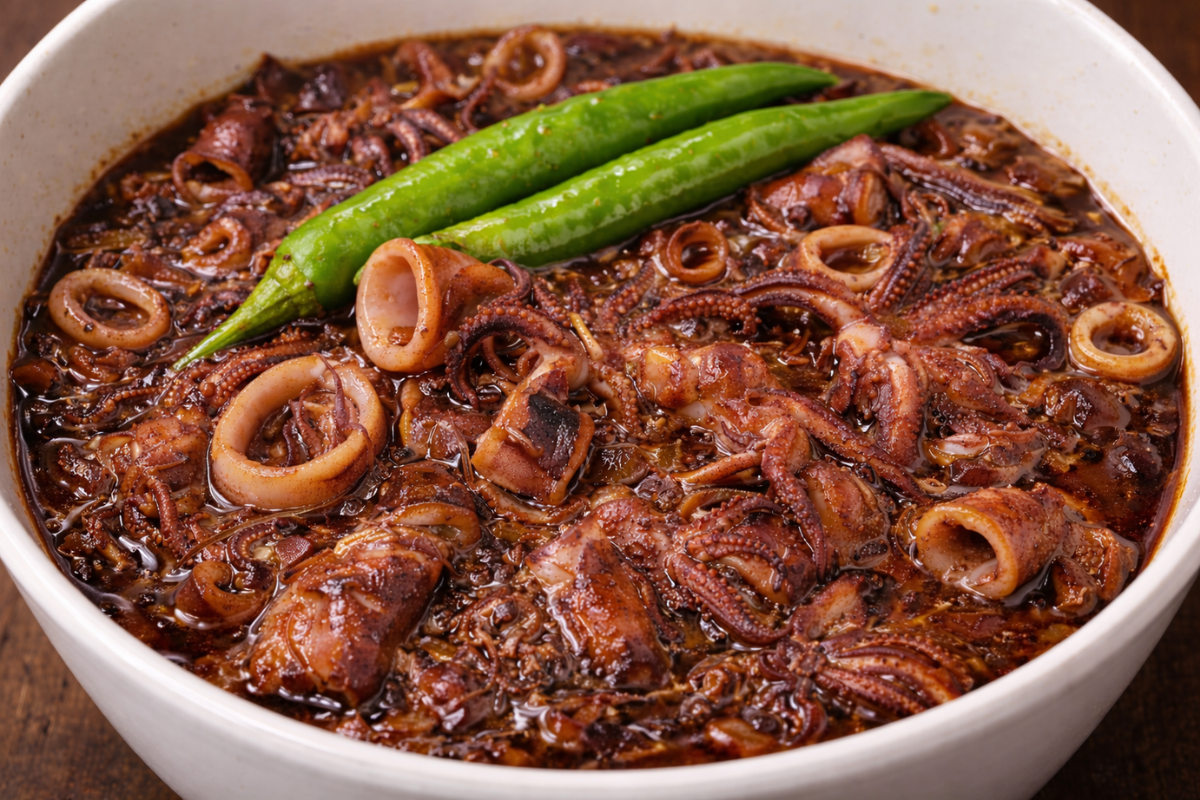
When Lent begins, I always start thinking about the dishes we grew up eating at home. One recipe that comes to mind right away is Filipino squid adobo. It may not be the flashiest dish on the table, but for me, it is one of those simple meals that carries so many memories.
Growing up in the Philippines, Lent meant we often ate more seafood, especially on Fridays. Many families avoid meat during this season, so fish and seafood become a bigger part of everyday meals. Check out my post if you want to know more about Lent Traditions in the Philippines. Among those dishes, squid adobo was always one that quietly showed up again and again.
It is a very simple dish, but that is part of what makes it so special to me. Filipino cooking often relies on a few basic ingredients, balanced well, and cooked with care. This recipe is a perfect example of that.
Why Filipino Squid Adobo Feels So Familiar
I still remember seeing fresh squid cleaned in the kitchen before cooking. Back home, squid was easy to find in the market, and it was one of those ingredients that could turn into something delicious without much effort. This time, I bought the squid from Say Weee, which made it easier for me to recreate this familiar dish here in the United States.
Once cleaned, the squid would be cooked with garlic, vinegar, soy sauce, and a few seasonings. Those are familiar flavors in many Filipino adobo dishes, but squid adobo has its own personality.
As the squid cooks, it releases its natural juices and ink. That slowly turns the sauce darker as it simmers. The result is a rich and savory sauce with a tangy edge from the vinegar and deep flavor from the squid itself.
It may look unusual to someone trying it for the first time. However, that dark sauce is exactly what makes this dish special.
The Flavor of Filipino Squid Adobo
One of the first things I notice when making this dish is the smell of garlic cooking in oil. That alone already feels comforting. Then, once the vinegar and soy sauce go in, the kitchen fills with that familiar adobo aroma that so many Filipinos know right away.
For me, this is the kind of recipe that feels both humble and comforting. It does not need fancy ingredients. It does not need extra steps. Instead, it depends on the balance of salty, tangy, and savory flavors.
That is something I have always loved about Filipino cooking. So many traditional dishes are practical, simple, and deeply flavorful at the same time.
Why This Dish Works So Well During Lent
Another reason I love making Filipino squid adobo during Lent is that it feels hearty and satisfying even without meat. Squid cooks quickly, and it absorbs the sauce beautifully.
Once served over warm rice, the sauce soaks into every bite. That is really one of the best ways to enjoy it. Rice is almost always part of a Filipino meal, and this dish truly shines when paired with freshly steamed rice.
It is the kind of meal that feels simple, but it still leaves you full and happy.
Cooking Squid Is Easier Than It Looks
I know some people feel a little intimidated by squid, especially if they have never cooked it before. Still, once it is cleaned, it is actually very easy to prepare.
The biggest thing to remember is that squid cooks quickly. If it cooks too long, it can become tough. So the goal is to cook it just long enough for it to turn tender while allowing the sauce to come together.
The process itself is straightforward. First, I sauté the garlic and onions to build the base flavor. Next, I add the squid and let it cook briefly. Then I pour in the soy sauce, vinegar, and seasonings. After that, everything simmers together until the sauce develops and the squid becomes tender.
As it cooks, the squid releases its ink, which gives the sauce that darker color and deeper flavor. For people who grew up eating this dish, that dark sauce is actually one of the best parts.
A Dish That Brings Me Home
Whenever I make this dish here in the United States, it makes me feel connected to my roots. Even though I am far from where I grew up, recipes like this bring a small piece of home into my kitchen.
That is one reason I love sharing traditional recipes on The Tea Gatherer. Food carries memories with it. It reminds us of family meals, ordinary days, and traditions passed down over time.
For many Filipinos, adobo is more than just a recipe. It is part of everyday life. It is part of home.
And sometimes, the simplest dishes are the ones that hold the deepest meaning.
Filipino Squid Adobo Is Simple but Special
Filipino squid adobo may not look fancy, but it is comforting, flavorful, and deeply nostalgic for me. It is also a wonderful dish to make during the Lenten season or anytime you want a simple seafood meal with bold flavor.
If you have never tried Filipino squid adobo before, I hope this recipe encourages you to make it at home. Served with warm rice, it is a dish that feels both humble and satisfying.
For me, it is one of those recipes that quietly says so much. It speaks of home, tradition, and the kind of simple cooking that stays with you for years.

Adobong Pusit
Ingredients
- 1 lb Fresh Squid (pusit), cleaned and sliced into rings
- 2 tbsp Cooking Oil
- 1 med Onion, chopped
- 4 cloves Garlic, minced
- 1/4 cup Soy Sauce
- 1/4 cup Vinegar
- 1/4 cup Water or less
- 2 pcs Bay Leaves
- 1 tsp Whole Peppercorn
- 2 pcs Green Chili Peppers (optional)
- 1 tsp Sugar (optional, to balance flavor)
- Salt to tast
Instructions
Prepare the Squid
- Gently pull the head away from the body to remove the innards.
- Locate the small hard mouth (beak) in the center of the tentacles and remove it by squeezing it out with your fingers.
- Remove the transparent quill from inside the body, rinse the squid well, then slice the body into rings while keeping the tentacles whole.
Cooking Instructions
- Heat cooking oil in a pan over medium heat.
- Sauté the chopped onion and minced garlic until fragrant and softened.
- Add the squid to the pan and cook for about 2 minutes while stirring.
- Pour in the soy sauce, water, bay leaves, and peppercorns. Bring the mixture to a gentle simmer.
- Add the vinegar. Do not stir for about 1–2 minutes to allow the vinegar flavor to cook properly.
- Add the green chili peppers and sugar if using.
- Simmer for about 8–10 minutes or until the squid is tender and the sauce slightly thickens.
- Taste and adjust seasoning with salt and pepper if needed.
- Serve hot with freshly steamed rice.