
Pinakbet Recipe with Japanese Sweet Potatoes (Filipino Vegetable Stew)
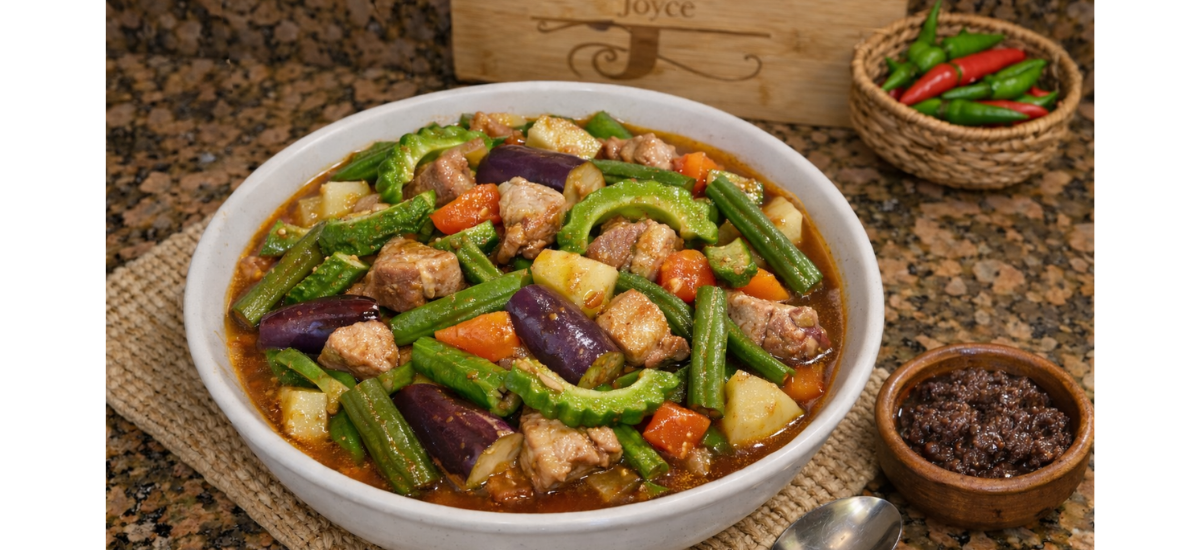
Whenever I make Pinakbet with Japanese sweet potatoes, I feel like I am reconnecting with my roots. There is something so comforting about a big pan of vegetables simmering gently on the stove. The colors alone make me happy, and as the onions, tomatoes, and ginger cook together, the kitchen starts to smell like home. That simple moment always takes me back to the Philippines.
Pinakbet has always been one of those dishes that feels humble but deeply satisfying to me. It does not try to be fancy. It does not need complicated steps. Still, when I take that first bite, I am reminded how much flavor simple ingredients can bring when they are cooked with care.
In this version, I used Japanese sweet potatoes instead of regular white potatoes. I really enjoy the subtle sweetness they add. For me, that sweetness balances beautifully with the slight bitterness of the ampalaya. That contrast is one of the things I love most about this dish.
Why I Love Pinakbet with Japanese Sweet Potatoes
I love this dish because it brings together so many vegetables in one pot. It feels hearty, colorful, and nourishing all at once. It is the kind of meal that fills me up, but it also makes me feel good after eating it.
Every vegetable adds something different. The eggplant becomes soft and silky. The okra softens but still keeps a gentle bite. The winged beans add texture, and the moringa pods bring an earthy depth that I have always loved. Then there is the ampalaya, which adds a pleasant bitterness that makes the whole dish more interesting.
I also add pork, but I do not use too much. For me, Pinakbet is really about the vegetables. The pork is there to add richness and support the dish, not overpower it. That balance is part of what makes it so comforting.
Building the Flavor Base
What makes this dish truly special to me is the flavor base. I always start with onions, tomatoes, and fresh ginger. As they sauté, the onions soften, the tomatoes begin to break down, and the ginger adds warmth.
Next, I add the pork and let it cook until it picks up a little color. Then comes the shrimp paste. That one ingredient changes everything. It brings that savory, deep umami flavor that gives Pinakbet so much character.
I think that is one reason this dish stays with me. It is simple, but it tastes layered and complete.
A Dish That Teaches Patience
Pinakbet always reminds me to slow down a little in the kitchen. I do not rush it. I layer the vegetables carefully, starting with the ones that need more time to cook.
I also try not to stir too much. Instead, I gently fold the vegetables or lightly shake the pan. That small step helps the vegetables hold their shape. The eggplant stays silky instead of turning mushy, and the okra stays whole instead of falling apart.
Cooking this way feels calm to me. It reminds me that good food does not always need speed. Sometimes it just needs a little patience.
A Taste of Home in My Kitchen
Living away from the Philippines, I sometimes miss the simplicity of everyday meals back home. Pinakbet was never a fancy occasion dish for us. It was everyday food, made when vegetables were fresh and abundant.
When I make it here, it feels grounding. It reminds me that food does not have to be expensive or complicated to be meaningful. A pot full of vegetables, a little pork, shrimp paste, and time can create something that feels deeply comforting.
Sometimes I serve it with steamed rice. Other times, I enjoy it on its own when I want something lighter. Either way, it always feels satisfying.
Why I Keep Coming Back to This Dish
I keep making Pinakbet because it feels honest and familiar. It helps me use what I have in the refrigerator, and it gives me room to make small changes while still respecting the traditional flavors. In my kitchen, that meant using Japanese sweet potatoes for a gentle sweetness that works so well with the savory sauce and bitter melon.
For me, Pinakbet is more than just a vegetable dish. It is comfort, memory, and home. Every time I make it, I feel like I am bringing a little piece of the Philippines to my table.
If you enjoy hearty vegetable dishes with bold flavor, I hope you give this one a try.
Pinakbet with Japanese Sweet Potatoes
Ingredients
- 1 tbsp Cooking Oil
- 1 small Onion, chopped
- 2 medium Tomatoes, chopped
- 1 thumb Fresh Ginger, sliced
- 1 lb Pork Belly or Shoulder, cut into small cubes
- 1 medium Japanese Sweet Potato, peeled and cubed
- 1 mediuam Asian Eggplant
- 8-10 pcs Okra, cut in chunks
- 1-2 bunch Moringa Pods, into into pieces
- 1 small Ampalaya or Bitter Melon
- 1 cup Water
- ground Black Pepper to taste
Instructions
- Heat the oil in a large pan or pot over medium heat.
- Sauté the onion, tomatoes, and ginger until fragrant and softened.
- Add the pork and cook until lightly browned.
- Stir in the shrimp paste and cook for another minute.
- Pour in the water and let the pork simmer until slightly tender.
- Add the Japanese sweet potatoes first, since they take longer to cook.
- Next, add the eggplant, moringa pods, and winged beans.
- Add the okra and ampalaya last.
- Cover and let everything simmer gently until the vegetables are tender.
- Season with black pepper if needed.
- Gently fold the vegetables or shake the pan instead of stirring too much.
- Serve warm with steamed rice.
Notes
- Try not to over-stir so the vegetables stay intact.
- Add the vegetables in stages so they cook evenly.
- Adjust the shrimp paste to your taste.
- This dish is great with rice, but I also enjoy it on its own.